Ponytail effect
When you pull hair tightly back, the shadow at the sides disappears. Temples are clean, face looks slimmer and more defined. Essential for ballerinas, athletes, bun lovers.

When you tie your hair back, fine hairs often show at the temples. Shaving here is tricky: too close to the hairline, too stubbly when growing back. Sugaring creates a soft transition. The result: A clean frame and perfect preparation for buns and ponytails.

No fuzz, no hard lines, full ponytail confidence.
I'm Nataliia. Temples sugaring is my recommendation for clear facial contours. Fuzz that blends into scalp hair bothers many people – especially when hair is tied back. When I define this zone, the face often looks slightly slimmer and clearer instantly. Whether for a sleek bun or just because: Nobody says "you had something done," only "your face looks so open."
— Nataliia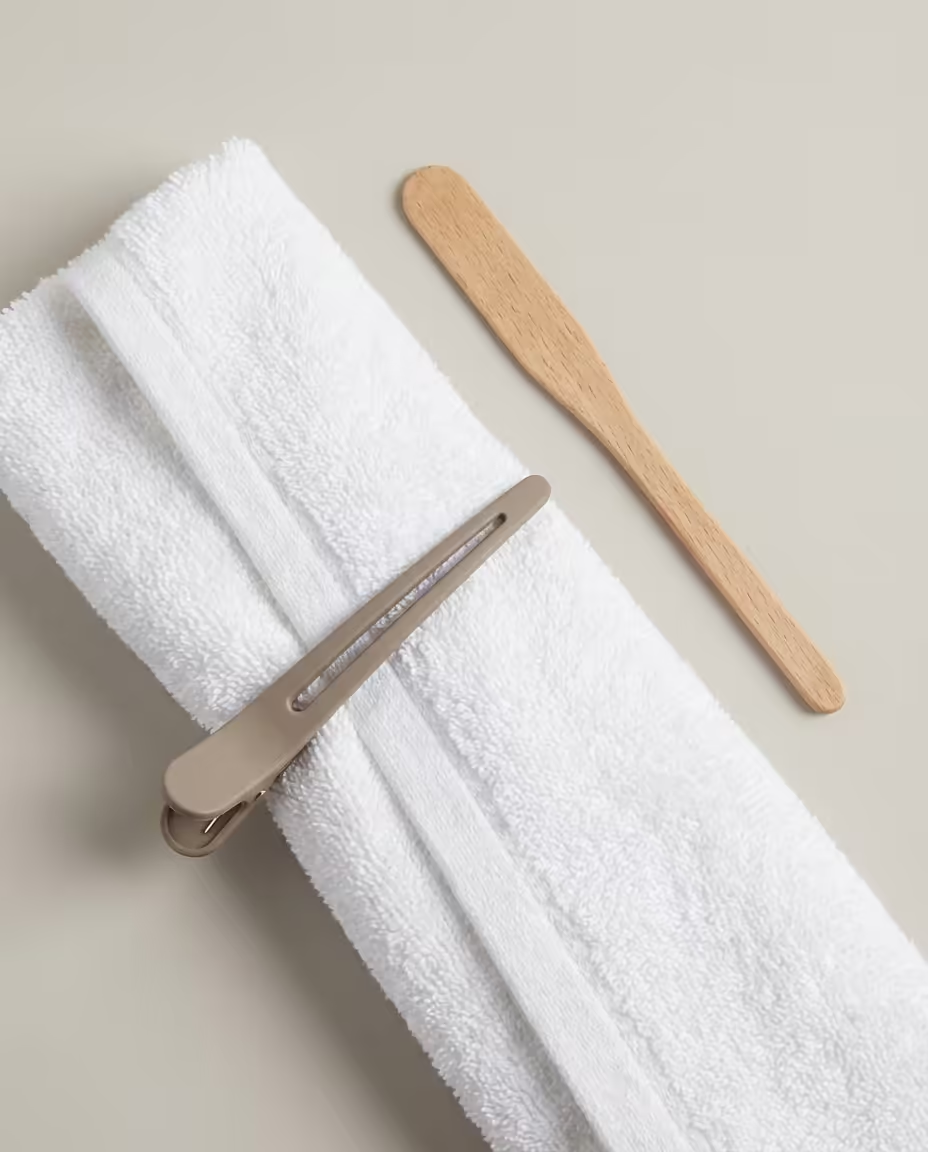
Millimeter-precise definition without removing too much.
We check briefly in the mirror together: where does fuzz end, where does main hair begin? Every temple is different, I adapt entirely to your structure.
2 min
With a headband, I securely hold your main hair back. The paste should only go where it's intended.
2 min
In small steps, I shape the line. My goal is not a harsh cut, but a soft transition to the hairline.
5–8 min
A cool compress feels good now. Since the skin here is thin, I soothe it immediately afterwards.
1–2 min
Calm skin, clear view.
It's best to come without foundation or powder at the temples. On clean skin, the paste can grip best.
Retinol and acids (AHA/BHA) at the temples are best paused 3 days before. The skin there is thin and needs some rest.
If it suits you, wash your hair the next day instead. Shampoo can sting on very fresh skin.
Please avoid hairspray or gel at the temples. Product residue makes it harder for the paste to work.
Styling products and oil shouldn't touch the open pore zone.
Book now
Book templesGlasses, ponytails, and sensitive skin.
Just message me on WhatsApp – I'm happy to answer your questions.
The temples act like a frame for your face: If something looks 'frayed' there, the contour quickly seems uneven, even if everything else is polished.
Many book this zone not because they have lots of hair, but because they want to smooth out that specific edge that catches the light from the side.
At the temples, you can instantly see if a contour is too harsh or taken back too far.
That's why I work to make it look like *you*: cleaner, softer, but not like an artificially drawn line. If you have a specific shape in mind, just tell me – I'll follow your lead.
And if you're worried about your hairline: I work with extreme precision here. If paste ever gets too close, it dissolves easily with water – no drama, and no cutting required.
If you're wondering if this is the zone for you, you usually notice it in specific moments:
With temples, the question is often not 'if', but 'how much'.
The temples are close to the hairline, so I work in short, controlled sections.
It usually feels like a brief, warm pluck. The area is small, we're done quickly, and breaks are always okay.
Right after, the zone might look red or feel a bit warm – simply because the skin is thin there.
If you have plans later, tell me beforehand. I'll plan it so you leave relaxed and don't feel the need to hide.
Less is often more at the temples, because we touch them unconsciously.
Sometimes people say 'temples' but mean something else on the side of the face.