Acrylic strength, half the weight
Acrylic is strong but heavy. Polygel delivers the same durability without the weight on your nail. You notice the difference in daily life.

Polygel for cosmetic reinforcement of healthy natural nails. We shape and smooth the existing nail length for a groomed finish. No artificial nail extensions.

Polygel can give healthy natural nails a firmer, more even surface. We work on the existing nail plate; this service does not include extensions.
I am Nataliia. This manicure reinforces healthy natural nails with polygel. The existing nail length and natural shape determine what we can shape cosmetically. The reinforcement is modelled on the natural nail, cured and carefully filed into shape for a groomed, more even surface. This service reinforces natural nails; it does not extend them.
— Nataliia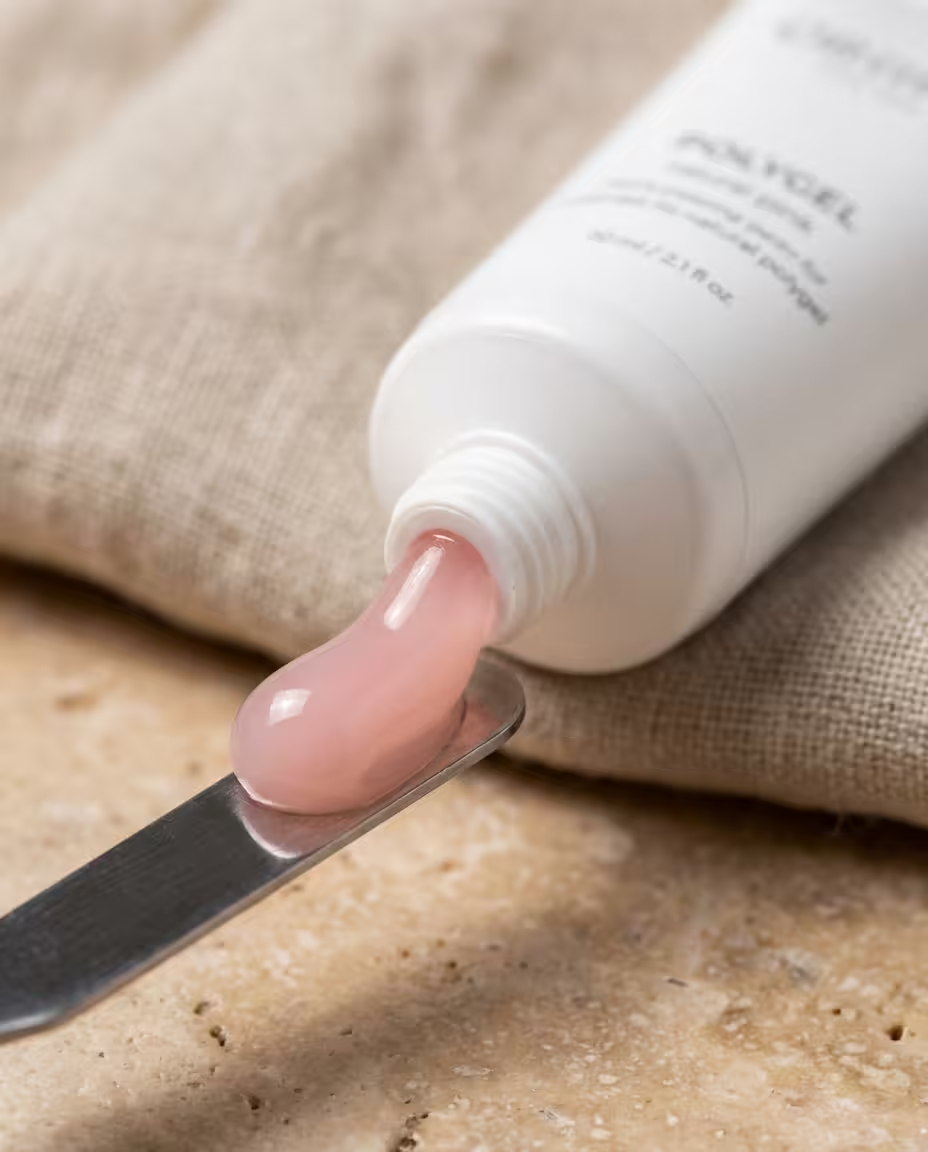
Polygel application requires patience and precision. Each step builds on the previous one.
Natural nail cleaned, shaped, surface lightly buffed. Cuticle work done. Polygel needs a solid foundation to bond to.
10 min
Dehydrator removes moisture, primer strengthens adhesion, base coat applied and cured under LED. Polygel will bond to this layer.
5 min
The reinforcement is planned around the existing natural nail length and shape. We discuss the appropriate thickness and cosmetic finish.
5–10 min
Polygel taken from the tube, placed on nail with brush and slip solution, sculpted to shape. Each nail done individually, every detail checked. Then cured under LED.
25–35 min
The reinforced natural nail is carefully filed into shape. Material thickness is balanced and the surface is smoothed.
10–15 min
Your choice: gel polish, French, or just clear top coat. Final cure under LED, cuticle oil, last check. Your nails are ready.
10–15 min
Polygel application takes time. Coming prepared makes the process smoother.
If you have acrylic, gel, or polygel on your nails, mention it when booking. Removal takes extra time and costs separately.
How long do you want? Which shape? Bring reference photos if you have them. Having an idea saves time.
Skip moisturiser for a few hours before arriving. Oily surfaces compromise how well polygel bonds.
First application can take sixty to ninety minutes. Don't rush in – this is detailed work that needs proper time.
Polygel lasts three to four weeks with proper care. A few rules help.
For more hold, smoother nails, and a natural finish.
Just message me on WhatsApp – I'm happy to answer your questions.
Related options
Healthy natural nails are cleaned and shaped. The reinforcement is modelled directly on the existing nail plate, cured according to the product instructions and carefully filed. Nail extensions with tips or forms are not part of this service.
We prepare the healthy natural nail, apply the material to the existing nail plate and cure it according to the product instructions. The surface and natural shape are then carefully refined. The treatment does not add artificial length.
Comparing the three methods:
Polygel minimises the disadvantages of both while combining their advantages. The most balanced option for most clients.
Polygel hat ein paar Vorteile, die man wirklich merkt:
Wenn dir Gel-Lack zu wenig Stabilität gibt, du aber keinen dicken, schweren Look willst, ist Polygel ein sehr guter Mittelweg: natürlich wirkend, schlank aufgebaut und trotzdem richtig belastbar.
At your first appointment we discuss the existing nail length, daily use and desired cosmetic finish. Reinforcement follows your natural nail; it does not create additional length.
The shape is chosen to suit the existing natural nail plate and length. Round, oval or soft-square finishes depend on what your natural nail allows.
I stay updated with quality innovations as they emerge.
This service suits healthy natural nails when cosmetic reinforcement and a more even surface are wanted. The existing length and nail shape remain the basis. No artificial nail extensions.
The available length is your existing natural nail length. We can trim and shape it for daily use. Artificial length, long tips and extensions are not offered with this manicure.
Im Alltag ist Polygel sehr robust. Was man nach einiger Zeit sieht, ist nicht „kaputt“, sondern schlicht der Rauswuchs.
Nach etwa 3–4 Wochen entsteht am Ansatz eine sichtbare Lücke. Dann ist ein Refill sinnvoll: Wir reduzieren das alte Material, füllen den Ansatz auf und bringen Form und Oberfläche wieder in Balance. Das ist in der Regel schonender, als jedes Mal alles komplett neu zu machen.
After three to four weeks, a gap forms at the base where nail has grown. During infill:
Faster and gentler than complete removal and reapplication.
Professional removal process:
Never remove at home. Picking destroys the nail surface and causes real damage.
Ja, man bekommt es wieder ab – aber bitte professionell.
Polygel wird kontrolliert abgefräst und der Rest sanft abgetragen. Wenn man es selbst abknibbelt, nimmt man fast immer Schichten des Naturnagels mit. Im Studio bleibt der Naturnagel darunter in der Regel gut in Form.
This service suits healthy natural nails when cosmetic reinforcement and a more even surface are wanted. The existing length and nail shape remain the basis. No artificial nail extensions.
Lange Zeit gab es im Studio im Grunde zwei Richtungen: Acryl (sehr stabil, aber oft schwerer und „fester“) oder Gel (flexibler, dafür manchmal weniger stabil).
Polygel liegt genau dazwischen: ein Hybrid-Material, das die Stabilität von Acryl mit einem leichteren, geligeren Tragegefühl verbindet. Das Ergebnis sind Nägel, die viel aushalten – ohne klobig zu wirken.
In this service, polygel is used as a cosmetic reinforcement on healthy natural nails. Application and curing follow the product system. It is not nail extension or medical treatment.