Change colour whenever you like
Dark red this week, nude next week, coral the week after. With regular polish, you're not locked in. Take it off at home tonight, put something new on tomorrow morning – your call.

You want colour, but you don't want to be stuck with it for weeks. Red today, maybe something else next week. Regular nail polish makes that possible. Full care for hands and feet – trimming, shaping, cuticles, calluses – and colour on all twenty nails at the end. No UV light, no gel, no complicated removal process. When the polish chips or you've had enough, you grab some remover and a cotton pad and that's it. Polish Complete is for anyone who wants groomed hands and feet with colour, but wants to stay flexible.

Gel polish lasts for weeks – but that's exactly what some people don't want. Regular nail polish has its own advantages that often get overlooked.
I'm Nataliia. Polish Complete is my package for clients who want to experiment. New colour they've never tried? Try it with regular polish – if you don't like it, it's gone by tomorrow. Some book Polish Complete before special occasions where a specific colour needs to match an outfit. After the wedding or event, it gets removed – no drama, no appointment needed. Others simply like the freedom. Gel polish feels like commitment to them. They don't want to walk around with the same colour for three weeks. Polish Complete gives them exactly that: full care, beautiful colour, zero obligation.
— Nataliia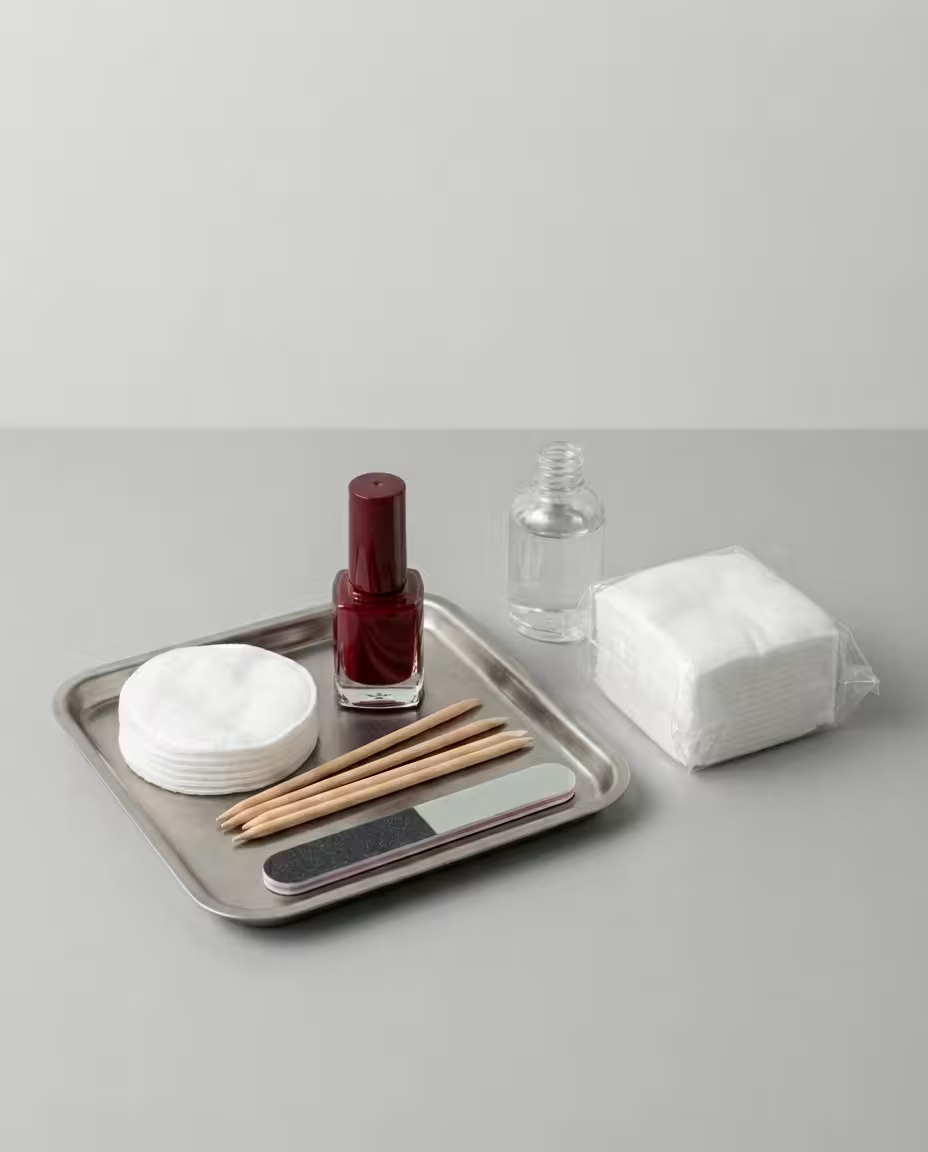
Full care is completed with classic nail polish. Allow 185–210 minutes for the whole package.
Warm water with nourishing solution. Skin and nails soften, you settle in. I usually start with feet.
8 minutes
Nails trimmed and shaped. With regular polish, a smooth surface is especially important – ridges show through.
8 minutes
Cuticles pushed back, excess skin removed. A clean cuticle line makes the polish look better later.
8 minutes
Hardened skin professionally removed. Soft feet – the polish is just the cherry on top.
10 minutes
Short break. Feet are prepped but not polished yet – that comes at the end, when everything else is done.
3 minutes
Hands soaked in warm water. Shorter than the foot soak but equally important for cuticle work.
5 minutes
Choose shape, even out all ten nails. Regular polish emphasises the shape – it should be perfect.
8 minutes
Detailed work on each cuticle. Hands are more visible, every detail matters here.
10 minutes
Now for the colourful part. Which colour for hands, which for feet? Same or different? We decide together.
5 minutes
Base coat, two layers of colour, top coat. Each layer dries briefly. Even, clean, glossy.
15 minutes
Drying time under fan or with spray. Final check. You leave with fresh, colourful nails – but careful for the next half hour.
8 minutes
A few things can make the appointment more pleasant and the results better.
If you have remnants of old polish – best to remove it at home first. Saves time during the appointment and I start on a clean slate.
What colour do you want? Does your outfit inspire you? If you're unsure, no problem – we'll figure it out together. But thinking ahead doesn't hurt.
After polishing, toenails need some air. Flip-flops or sandals are ideal. Closed shoes can damage fresh polish.
Polish needs time to fully harden. For the first thirty minutes after the appointment, you shouldn't touch anything that presses or rubs.
Regular polish doesn't last as long as gel – but with the right tricks, it lasts much longer than expected.
Flip-flops, drying time, and flexibility.
Just message me on WhatsApp – I'm happy to answer your questions.
Applying just color rarely lasts long. The system counts:
The simple formula: Base + 2× Color + Top – this way the look holds significantly better.
Can't you just apply color? Technically yes, but the result will be poor.
Base coat functions: Smooths the nail surface, improves polish adhesion, prevents dark pigments from staining the nail, protects the nail from chemicals.
Top coat functions: Provides shine (or matte finish), protects color from external factors, prevents scratching, delays chipping, speeds up drying (quick-dry top coats).
Base + 2 color coats + top coat = professional result. Just color = amateur result.
Simply put, polish consists of a few building blocks that work together:
I work with professional polishes that are often "5-free" or higher – deliberately avoiding certain controversial ingredients.
The beauty of this package: same color, same day. Especially in summer or for events, it looks particularly harmonious when hands and feet have exactly the same tone.
With separate appointments, this is often harder – different light, time gap, small nuances. In one session from the same bottle, it simply looks calmer.
Not every man wants color – and that's perfectly okay.
Possibilities: Subtle always works (clear or matte for a well-groomed look). Who feels like making a statement takes black or dark blue. I just adjust to what suits you.
With proper use, polish doesn't harm the nail. Improper use does.
Bad habits: Picking, peeling polish off (damages the surface), skipping base coat (staining), months of uninterrupted polish (nails need breaks), using low-quality polish.
Healthy habits: Proper application (base + color + top), gentle removal with acetone, colorless periods in between (even just a few days), nail care (cuticle oil), quality products.
For nail health, regular polish is definitely gentler than gel. But 'natural' it's not – still a chemical product. Balanced use is key.
Nail polish is surprisingly ancient. In ancient China (around 3000 BC), nobility colored their nails – with a mixture of beeswax, egg whites, gelatin, and flower pigments. Color indicated social status: gold and silver shades were reserved for the imperial family.
Modern nail polish emerged in the 1920s from car paint technology. Revlon founded the first real polish brand in 1932. Since then, formulas have evolved – faster drying, longer lasting, shinier.
Gel polish exploded in the 2010s, people said 'regular polish is dead'. But it didn't die. Still a billion-dollar market. Because polish can do what gel can't.
Let's confirm the difference:
Durability: Gel lasts 3-4 weeks, classic paint 5-14 days. Gel wins here.
Removal: Classic paint comes off at home in 5 minutes. Gel needs professional removal.
Health: Gel stays long, removal stresses the nail. Classic paint is friendlier, easy on, easy off.
Cost: Gel is pricier. Quick changes add up.
Drying: Gel hardens instantly (UV). Paint needs time – the first hour matters.
Flexibility: Paint lets you change color anytime. Gel commits you for weeks.
Classic polish has something calm: opening the bottle, brush stroke, waiting briefly. It feels almost like a mini-ritual.
And because it's not "for weeks", you often dare more. A bold green? Why not – if you don't like it after all, it's gone again tomorrow.
There's something in regular polish that gel doesn't have:
Ritual: Opening the bottle, familiar smell, careful brush strokes, watching it dry. Tactile, real, connecting.
Impermanence: Knowing it won't last forever makes it less precious, more experimental. You can play because the stakes are low.
Accessibility: No special equipment needed. Polish bottle, cotton, acetone – that's it. Democratically simple.
Nostalgia: For many, polish carries memories – mom getting ready, teenage sleepovers, first experiments with self-expression. Gel doesn't have that history yet.
Sometimes the 'less advanced' option is the more human one.
Plan about 185–210 minutes:
Very important: Please bring open shoes (flip-flops etc.) for the way home. Classic polish needs time to harden completely – in closed shoes the result suffers immediately.
Two separate appointments: Polish Manicure + Polish Pedicure = two different days, two round trips, two 'prep times'.
Polish Complete: Come once, leave once. Total time shorter, total cost lower.
And practical advantage: You only go through drying once. With two separate appointments, two 'be careful' periods. Here, handled in one go.
Classic polish fits particularly well if: